
My First Mortgage is a low deposit mortgage for first time buyers only.
You'll need a minimum deposit of £10,000. You could then borrow between £190,001 and £500,000 with a maximum loan to value of 98%.
- 5 year fixed rate. Early repayment charges may apply.
- Not available for flats, new build homes or properties in Northern Ireland.
- For a joint mortgage, both applicants must be first time buyers.
Things to consider with low deposit mortgages
- If the value of your home falls, you might end up owing more than it’s worth. This is known as negative equity
- A higher loan to value (LTV) may lead to a higher interest rate on your mortgage.
My First Mortgage not right for you?
Explore our other first time buyer mortgage options to find one that best suits you.

How to buy your first home with My First Mortgage
Option 1– Start online & finish on the phone
Get an online decision in principle. It tells you if we could lend you the amount you need. It’s free, no obligation and valid for 60 days.
Once you’ve got your online decision in principle, you can apply for your mortgage over the phone. We’ll send you an email telling you what information you need to send us. After we’ve got this, we’ll call you to arrange an appointment with one of our mortgage advisers.
Option 2– All on the phone
Get your decision in principle and apply for your mortgage over the phone.
Our mortgage team is here to help 9am to 6pm Monday to Friday and 9am to 2pm Saturday.
YOUR HOME MAY BE REPOSSESSED IF YOU DO NOT KEEP UP REPAYMENTS ON YOUR MORTGAGE
Applications are subject to status and lending criteria. Applicants must be UK residents aged 18 or over. The amount we will lend depends on your circumstances, the amount borrowed and the property. A higher deposit may be required for a flat or new build.
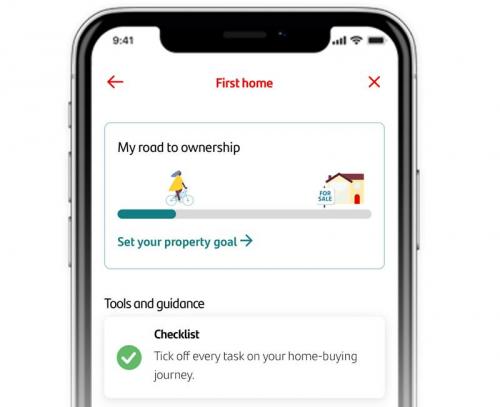
Making the path to home ownership smoother
Whether you're ready to buy now, or just mulling things over, My First Home has plenty to help you.
- See how much you could afford to borrow.
- Figure out how long it could take you to save your deposit.
- Find out how to apply for a mortgage.
- See your credit score and learn ways to improve it.
- Get handy house hunting tips.
- Learn about the offer stage and what comes next.
You’ll find My First Home in our Mobile Banking app under ‘More options’. Or you can start your journey online.
Useful information
Pros

You need a smaller deposit - so it’s easier to climb onto the property ladder. For example, with a 98% loan to value (LTV) mortgage you’ll only need to save 2% of the property price as a deposit. This helps if, like a lot of people, you find it tough to save enough for a bigger deposit.
You’ll be a home owner faster – this is a big plus if property prices are going up in your area. Higher prices mean higher deposits – not ideal if you’re saving to land your dream pad.
More spare cash – a smaller deposit means you can keep money aside for things like mortgage fees, legal fees and removals. You could have more for sprucing up your new pad with furniture or renovations as well.
Cons
More chance of negative equity – for example, if you only own 2% of your home to start with, you could end up owing more than it’s worth if property prices go down. This could make it trickier to remortgage or sell up in the future.
Higher interest rates – a low deposit mortgage means you’ll be borrowing more compared to your home’s value and there’s greater risk for lenders. So, you might have a higher interest rate and borrowing costs. Bigger deposit mortgages usually come with lower interest rates.
Fewer lenders offer low deposit mortgages, so you won’t be able to shop around as much. Plus, there may not be as many products to choose from. Some might have early repayment charges too.
Yes. With us they can. They could gift you the deposit just like they can with other mortgages. The family member or friend giving you the money just needs to confirm that it’s not repayable, there aren’t any conditions, and they won’t have any legal interest or claim over the home.
Loan to value (LTV) might sound baffling but it’s simpler than it might seem. It’s just how much you’ve borrowed compared to your home’s value.
So, say you paid £250,000 for your home. If you put down a deposit of £10,000 and borrowed the other £240,000, your LTV would be 96%. In other words, you paid for 96% of your home with a mortgage.
Your LTV is important when banks figure out what mortgage to offer you. The higher your LTV, the higher the interest rate you could be offered. This is because the lender’s taking on more risk.
The key thing, of course, is to work out how much deposit you want to put down. Our home deposit calculator can help you do this.
Just add a few details including what type of home you want to buy, where it is, how much you’ve already saved, and the size of the deposit you’d like. Our clever calculator will tell you the deposit you’re likely to need and how long it’ll take to save for it.
Choosing a mortgage can be confusing. With different types of products and rates available, where do you start? With a low deposit mortgage, there may be fewer options available to you. For example, you might only be able to choose a 5 year fixed rate.
In this section we explain the different types of mortgages to help you work out what’s best for you.
| Fixed rate | Best for: For people who want to know how much they need to repay for the next few years. You can fix your deal for 2, 3, 5 or 10 years. During this fixed period your monthly payments will stay the same. After your fixed period you’ll move onto the Santander Standard Variable Rate. If you want to finish your deal early, you may have to pay an early repayment charge. |
| Tracker rate | Best for: For people who think interest rates might change in the next few years or want to make unlimited overpayments. You can choose a mortgage with an initial rate period and during this period your rate tracks above the Bank of England base rate. With this type of mortgage your payments may vary. The initial rate period is usually 2 years and after that you move onto the Santander Standard Variable Rate. |
| Lifetime Tracker rate | Best for: For those who don’t want to look for a new mortgage deal again or who want to make unlimited overpayments. With a Lifetime Tracker mortgage your rate will track above the Bank of England base rate for the life of your mortgage term. Your payments may vary with this type of mortgage. |
For an in-depth comparison of the mortgage types on offer read our guide to mortgages
Got a mortgage question? Mortgage help & support